Hacıveyiszade Mosque
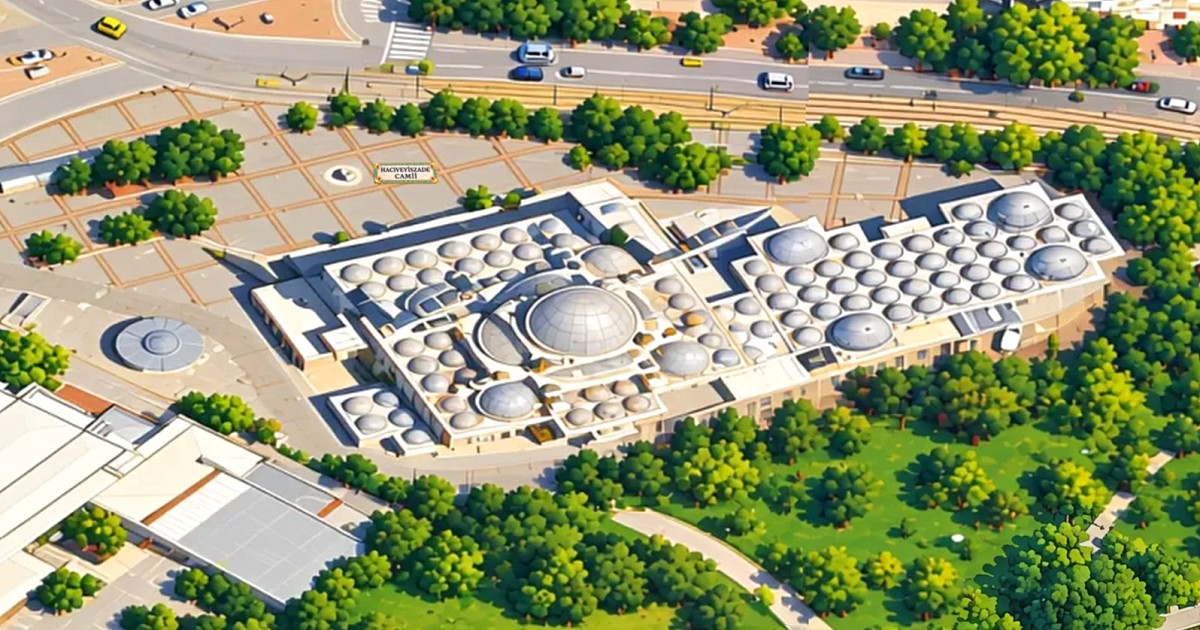
Rising beside Kültürpark, the Hacıveyiszade Mosque reinterprets the classical Ottoman mosque layout with modern materials. Begun by the Turkish Diyanet Foundation in 1986, it opened for worship about ten years later, in the mid-1990s, and is named after Hacıveyiszade Mustafa Efendi, a well-known scholar of Konya. Its two minarets, each with three balconies, rise more than sixty metres.
Visitor information
- Address
- Ferhuniye Mah. Sultanşah Cad., Selçuklu/Konya
About
Right beside Kültürpark, with its two slender minarets reaching into the sky, rises the Hacıveyiszade Mosque. It takes its name from Hacıveyiszade Mustafa Efendi, one of the well-known scholars of Konya's recent past. Mustafa Efendi was born in Konya in 1887.
He memorised the Quran and received his first lessons from his father, Hacı Veyis Efendi, a teacher at the Zâr Efendi Madrasa, and in 1904 he received his teaching licence. For many years he taught Arabic and the religious sciences, and he preached in mosques and prisons. He supported his students both materially and spiritually.
Mustafa Efendi passed away on 5 February 1960 and was buried in the Üçler Cemetery. Construction of the mosque built in his memory was begun by the Turkish Diyanet Foundation in 1986. The design was prepared by the architect Mustafa Özkarakaya.
After about ten years of work, the mosque opened for worship in the mid-1990s. The mosque reinterprets a familiar layout of classical Ottoman mosques with modern materials: half domes support the main central dome on all four sides, and smaller domes are arranged around them. This scheme is known from the great classical mosques of Istanbul.
Its two minarets, each with three balconies, rise more than sixty metres. The inscriptions in bold jali thuluth script in the domes are the work of the calligrapher Hüseyin Öksüz, while the gilded inscriptions carved into marble above the gallery floor were made by the calligrapher Hüseyin Kutlu. The mihrab and the minbar are of marble, and large tile panels flank the mihrab.
The door leaves were made with the kündekâri technique, which can also be seen on the minbar of Konya's Alaeddin Mosque. In this technique, wooden pieces are fitted together without nails or glue; the craftsmanship here is by the master Ahmet Yılçay. Just east of the mosque stands the building of the Konya Provincial Mufti's Office.
Did you know? From 1950 onwards, Hacıveyiszade Mustafa Efendi served as imam and preacher at the Aziziye Mosque in the historic bazaar. Thousands of people can pray here at the same time; when visiting, please respect prayer times and the dress code.