Mahmudiye Madrasa
Ali Gav Zawiya
This small building north of the Karatay Madrasa, also known as the Ali Gav Madrasa, is counted among Konya's oldest madrasas. A Seljuk-period madrasa with a covered courtyard, it became a dervish lodge in the Karamanid period and a madrasa again in the last years of the Ottoman Empire. After its restoration in the early 2010s it hosted language and arts courses.
About
Just north of the Karatay Madrasa, near Alaeddin Hill, this small stone building is one of Konya's oldest madrasas. It is known both as the Ali Gav Madrasa and as the Mahmudiye Madrasa. Because neither its inscription nor any document about its construction has survived, its exact date is unknown.
By comparing it with similar madrasas, scholars date it to the Seljuk period, between the late 12th and the early 13th century. The madrasa has a covered-courtyard plan: the central courtyard was not left open but was roofed by a dome resting on piers. It is considered one of the first examples of this type in Konya.
In the Karamanid period a dervish called Ali Gav Baba was buried in this old madrasa, and the building became a zawiya, a small lodge where dervishes gathered. Gav means ox in Persian. According to a popular legend, during the conquest of Konya a dervish wrapped himself in an ox hide, slipped into the castle with the herd in the evening and opened the city gate from inside at night; the nickname Ali Gav is said to come from this story.
In the last years of the Ottoman Empire, under Governor Ferid Pasha, the zawiya was closed. The building was repaired with donations from benefactors and reopened as a madrasa. After the founding of the Republic it closed, like all madrasas; for a time it served as a children's library and later as the bookbinding workshop of the provincial public library.
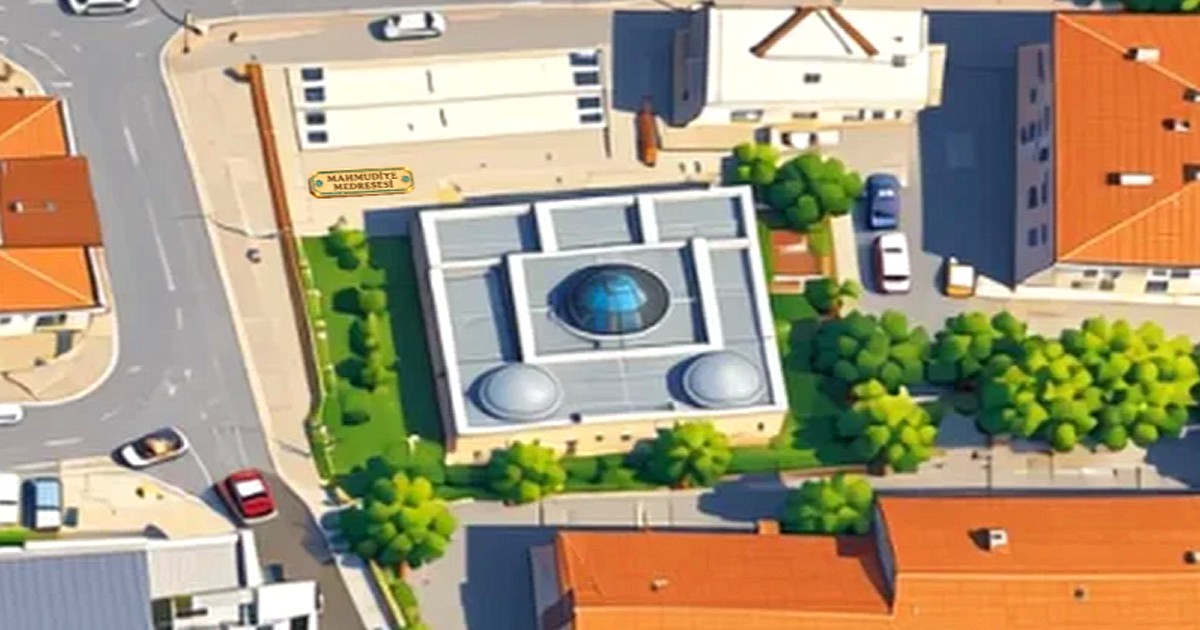
Before its restoration, only the main iwan on the south side and two side rooms were still intact. Excavations in 2009 revealed the madrasa's original plan, and in the early 2010s the building was restored. The ruined walls were completed in stone, true to their original form, and the central space was covered with a glass dome.
After the restoration, courses were held here in Ottoman Turkish, calligraphy, illumination, the ney flute, music and the Quran. Did you know? This small madrasa is older than the famous Karatay Madrasa, which was built in 1251.
If a class is in progress inside, please keep quiet.