Karatay Madrasa
Tile Museum
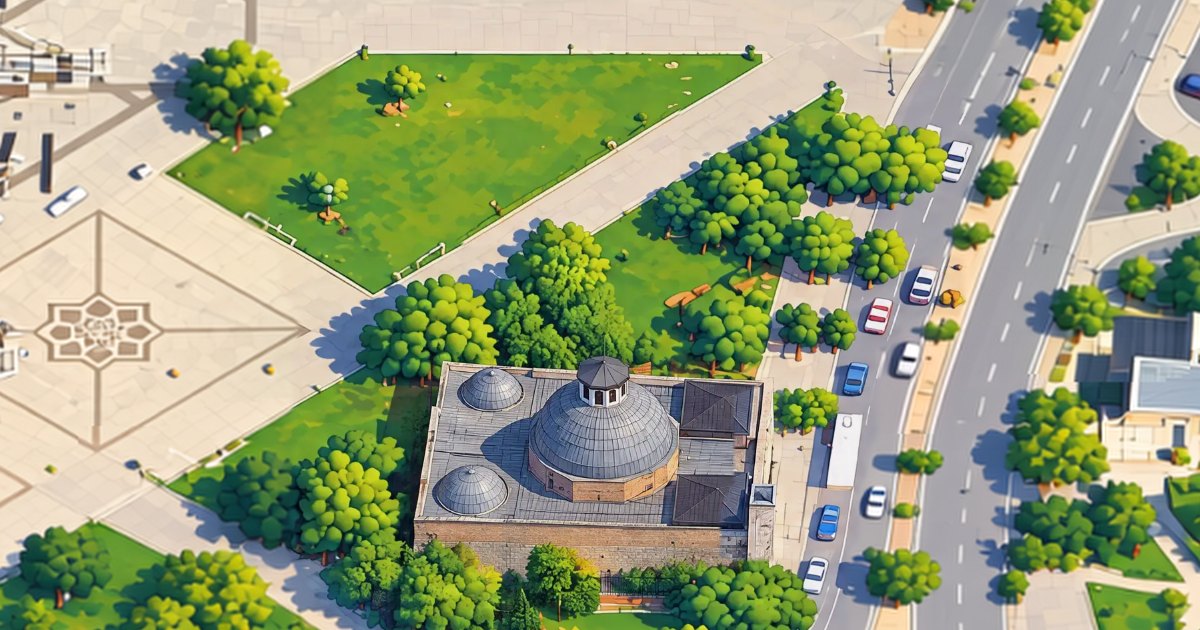
Emir Celaleddin Karatay built this madrasa in 1251, during the reign of Sultan İzzeddin Keykavus II, and it is famous for the turquoise and deep blue tiles covering its dome. Since 1955 it has been the Museum of Tile Works, showing tiles and ceramics from the Seljuk, Beylik and Ottoman periods. Its founder, Celaleddin Karatay, is buried here in a room beside the main hall.
About
As you step inside, look up first. The dome is covered in turquoise and deep blue tiles, and twenty-four-pointed stars, separated by white plaster bands, spread across it from top to bottom. This is the Karatay Madrasa.
According to the inscription on the portal, the Seljuk statesman Celaleddin Karatay built it in 1251, during the reign of Sultan İzzeddin Keykavus the Second. Who the architect was, however, is not known for certain. Celaleddin Karatay's own life is fascinating too.
The historian Ibn Bibi writes that he was of Byzantine origin. He rose in the service of Sultan Alaeddin Keykubad the First, and after the defeat at Kösedağ he was again given important offices. After he became atabeg in 1249, he worked to keep the three brother sultans who ruled together from fighting one another.
The Karatay Caravanserai near Kayseri is also his work. Karatay died in Kayseri in 1254 and was buried in Konya, in his own madrasa. According to the tales recorded by Eflaki, Mevlana respected him as well.
Take another look at the portal outside: it is made of grey and white marble, decorated with two-coloured inlaid panels, and it stands not in the middle of the façade but at its corner. On the triangles that lead up to the dome, the names of the Prophet Muhammad, the four caliphs and the prophets David, Jesus and Moses are written in Kufic script. At the top of the dome there is a round opening, and right below it a pool.
For this reason some have taken the building for a place used to observe the sky; but that is only an interpretation. In Seljuk times hadith and Qur'anic commentary were taught here. In 1955 the building opened as the Museum of Tile Works.
Among the most important pieces in the collection are figural tiles from the Kubadabad Palace on the shore of Lake Beyşehir: courtiers, hunting scenes and legendary animals. Did you know? In 2014 the madrasa was added to UNESCO's World Heritage Tentative List, together with other Anatolian Seljuk madrasas.
And Celaleddin Karatay's sarcophagus is still here, in the small room to the left of the main hall.