Mevlana Museum
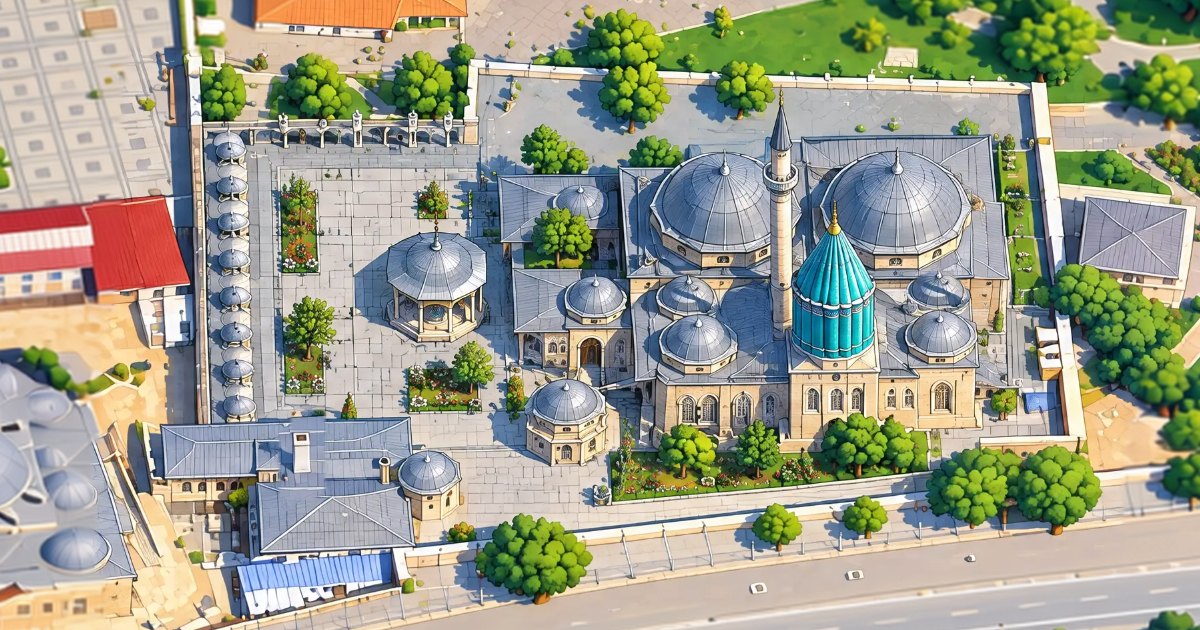
This former Mevlevi lodge holds the tomb of Mevlana Jalaluddin Rumi. The tomb beneath the Kubbe-i Hadra, the Green Dome, was built in 1274; the lodge was closed in 1925 and later turned into a museum. Visitors can see the tomb, the sema hall, the small mosque, the dervish cells and the kitchen; admission is free.
Visitor information
- Address
- Aziziye Mah. Müze Alanı Cad. No:1, Karatay/Konya
- Visiting
- Her gün 09.00–17.00 (gişe 16.30'da kapanır; pazartesi gişe 10.00'da açılır)
- Entry
- Ücretsiz
About
You are now at the heart of Konya. Beneath the turquoise Green Dome rests Mevlana Jalaluddin Rumi. Mevlana was born in 1207 in Balkh, a city that lies in today's Afghanistan.
When he was still a small child, his family left Balkh. After a long journey through Baghdad, Damascus, Malatya and Karaman, they settled in Konya at the invitation of the Seljuk sultan Alaeddin Keykubad. That is also where the name Rumi comes from: in those days Anatolia was called the land of Rum.
In November 1244 he met the wandering dervish Shams-i Tabrizi, and this encounter changed his life; he composed most of his poems after it. He composed the six-volume Masnavi in Persian, and his close friend Husameddin Chelebi wrote down its verses. Mevlana passed away in Konya on 17 December 1273.
Because he saw death as a reunion with the Beloved, this day is called Şeb-i Arus, the wedding night. The ground you are standing on was once the palace rose garden that Sultan Alaeddin gave to Mevlana's father, Bahaeddin Veled. Mevlana was buried beside his father.
With the permission of his son, Sultan Veled, the architect Bedreddin of Tabriz built the first tomb over the grave in 1274. The Green Dome took its present shape in the Karamanid period, and in Ottoman times a sema hall, a small mosque and dervish cells were added to the lodge. The lodge was closed in 1925 and soon afterwards opened as a museum.
Inside you can see the oldest copy of the Masnavi, written five years after Mevlana's death, and the sema hall where the ceremony took place. The April Bowl, a gift from the Ilkhanid ruler Abu Said Bahadur Khan, is here as well; according to tradition, April rain was collected in it and handed out for healing. Did you know?
In 2008 the Mevlevi sema ceremony was added to UNESCO's list of the Intangible Cultural Heritage of Humanity. Today this is one of the most visited museums in Türkiye. Please stay quiet and respectful here; for many visitors this is a moment of prayer.