Aziziye Mosque
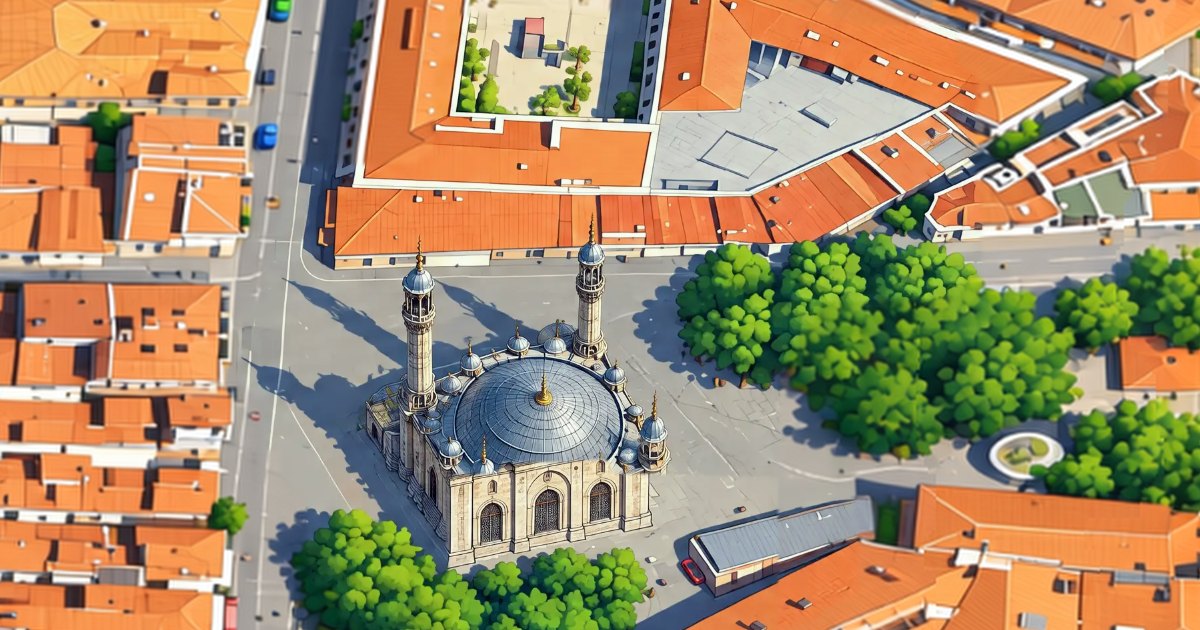
A late Ottoman mosque showing the influence of European styles, in the middle of the historic bazaar. After the 17th-century mosque on this site burned in 1867, work on a new one began in 1872, funded by endowment revenues and generous help from Sultan Abdülaziz and his mother Pertevniyal Valide Sultan, and it was completed within a few years. Its twin fluted minarets, whose balconies are covered by small roofs on columns, are easy to spot.
About
Stop for a moment in the busy Konya bazaar and look up. In front of you the Aziziye Mosque rises on a high base reached by steps. On this site, once known as the plot of the Bezirganlar Han, there used to be another mosque.
It was built in the 17th century by Musahib Mustafa Pasha, the husband of Hatice Sultan, a daughter of Sultan Mehmed the Fourth. Because it had shops beneath it, people called it the High Mosque. That mosque was ruined by a fire in 1867.
In its place a new mosque was built with endowment revenues and generous financial help from Sultan Abdülaziz and his mother, Pertevniyal Valide Sultan. Work began in 1872 and was finished within a few years. The mosque takes its name from Sultan Abdülaziz and is known as the last great Ottoman mosque built in Konya.
The Aziziye is built entirely of cut stone. In those years European art movements were shaping Ottoman architecture; this mosque brings several of them together and tries out new ideas in mosque design. On every facade you will see large round-arched windows.
After the porch with six columns and three domes, you enter the square prayer hall, covered by a single great dome. Small turrets with pointed caps surround the dome, and larger towers rise at the four corners. The balconies of the twin fluted minarets are covered by small roofs resting on columns; in their proportions and balcony shapes they differ from the usual Turkish minaret.
Inside, be sure to look at the mihrab and the minbar. Both are carved with rich decoration from a bluish stone known locally as göktaş, and there are fine inscriptions above the mihrab and the doors. Did you know?
Each of the two side walls has five entrances, a feature rarely seen in Turkish architecture. Nor does the mosque have the usual courtyard; its ablution fountains stand against the bases of the minarets. We suggest visiting outside prayer times.