Alaeddin Hill and Alaeddin Mosque
This hill in the heart of the city is an ancient mound, built up over thousands of years by settlements layered on top of one another. The Alaeddin Mosque on its summit was begun under Sultan Mesud I and completed in 1220 under Sultan Alaeddin Keykubad I by the Damascene architect Muhammad ibn Khawlan. Don't miss its walnut minbar dated 1155 and the tomb of the Seljuk sultans in the courtyard.
About
This green hill right in the centre of the city is a mound thousands of years old. With an average height of 20 metres, it grew from the remains of settlements built one on top of another. In the excavations carried out on the hill in 1941, pottery fragments from the Phrygian period were found in the lowest layers, traces of the Greek, Roman and Byzantine eras above them, and Seljuk and Ottoman layers at the very top.
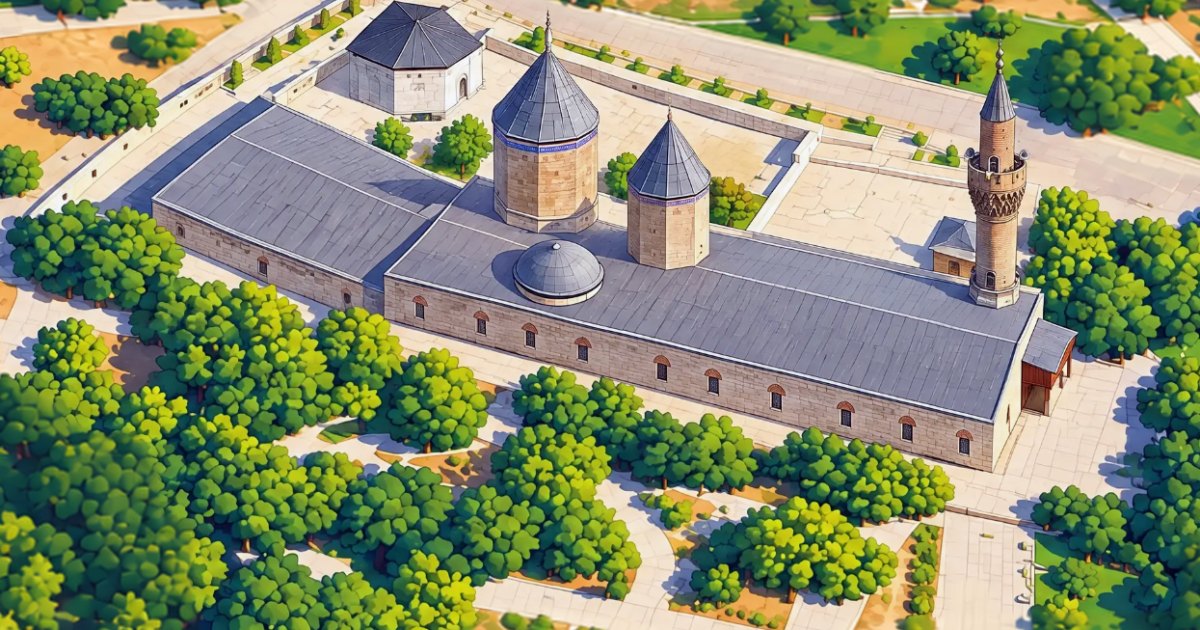
In Seljuk times, with its citadel and the sultan's palace, the hill was the seat of government. Where the Alaeddin Mosque now stands, there was first a smaller mosque built under Sultan Mesud the First. Sultan İzzeddin Keykavus the First began rebuilding it on a larger scale in 1219; after his death his brother, Sultan Alaeddin Keykubad the First, carried on the work, and the mosque was completed in 1220.
The construction was supervised by Atabeg Ayaz, and the inscriptions name the architect, Muhammad ibn Khawlan of Damascus. Most of the columns inside were brought from older buildings; one of them even bears a Greek inscription. Take a close look at the walnut pulpit.
Dated 1155, it was made in the kündekari technique, its pieces fitted into one another without nails or glue; its master was Hacı Mengübertî of Ahlat. In the ten-sided tomb in the courtyard there are eight sarcophagi, and its tile inscription bears the name of Kılıçarslan the Second. The second, octagonal tomb in the courtyard was never finished.
On a bastion of the walls up here there once stood a Seljuk pavilion overlooking the city. Famous for its tile and stucco decoration, the pavilion was demolished at the beginning of the twentieth century, and today only a small remnant survives. Some of the pavilion's tiles found in the 1941 excavation were placed in the tile museum in the Karatay Madrasa.
Did you know? Carpets from the Seljuk period were found in this mosque in 1905. They were taken to Istanbul in 1914 and today belong to the collection of the Museum of Turkish and Islamic Arts.
Now, with its footpaths and tea gardens, the hill is a meeting place for the people of Konya. When you visit the mosque, please mind the prayer times and keep quiet.