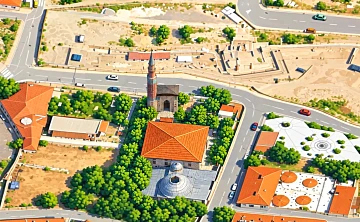
Konya Archaeological Museum
First opened in 1901, the museum has been in its present building near the Sahib-i Ata Complex since 1962. Its wide collection ranges from Neolithic finds from Çatalhöyük to a Roman marble sarcophagus of Heracles and a sixth-century Byzantine mosaic from Sille. The ministry website currently lists it as closed, so check before you visit.
Visitor information
- Address
- Sahibata Mah. Sahibata Cad. No:91, Meram/Konya
- Visiting
- Bakanlık sayfasında 2026-11-06 itibarıyla 'kapalı' görünüyor. Açık olduğu dönemde: 09.00–17.00 (gişe 16.40), pazartesi kapalı
- Entry
- Ücretsiz (muze.gov.tr)
About
Konya's history does not begin with the Seljuks; it reaches back thousands of years. This museum tells that long story. First opened in 1901, it moved several times before settling into its present building in 1962.
In the showcases you will find Neolithic objects from Çatalhöyük, one of the oldest settlements in the world, and vessels from the Bronze Age and the Phrygian period. The museum's most famous piece is the marble sarcophagus of Heracles, found in the village of Yunuslar. Its reliefs show the legendary hero performing his difficult labours.
Don't miss the large sixth-century floor mosaic brought from a church in Sille. And in the garden, inscriptions await you from Iconium, Derbe and Lystra, the cities visited by Saint Paul.