Sırçalı Madrasa
Museum of Tombstones
The Seljuk emir Bedreddin Muslih founded this madrasa, which, according to the inscription on its portal, was built between 1242 and 1243. It takes its name from the glazed bricks and tiles decorating its halls, and the tile inscription in the main hall names the master as Muhammad ibn Muhammad of Tus. The two-storey building with its open courtyard opened to visitors in 1960 as the funerary monuments section of the Konya Museum; please check its current use before visiting.
About
Sırça means glass. This madrasa, too, takes its name from the shining glazed bricks and tiles that cover its vaulted halls and arcades. Take a close look at the turquoise, aubergine purple and cobalt blue.
According to the seven-line inscription on the portal, Bedreddin Muslih built the madrasa during the reign of Sultan Gıyaseddin Keyhüsrev the Second, in the Hijri year 640, that is between 1242 and 1243. That is why it is also called the Muslihiye Madrasa. In the sources, Bedreddin Muslih appears as the lala, or tutor, of Alaeddin Keykubad the Second.
The inscription states that the madrasa was founded for scholars and students of Islamic law of the Hanafi school. In the Seljuk and Ottoman periods, Islamic law and Qur'anic commentary were taught here. The tile inscription on the arch of the main hall even names the master: Muhammad ibn Muhammad of Tus.
This master had come to Anatolia from the Iranian world. In the Karatay and İnce Minareli madrasas, built after this one, the tiled surfaces grew even larger, and researchers look for traces of the same workshop in these buildings. The madrasa has an open courtyard and two storeys.
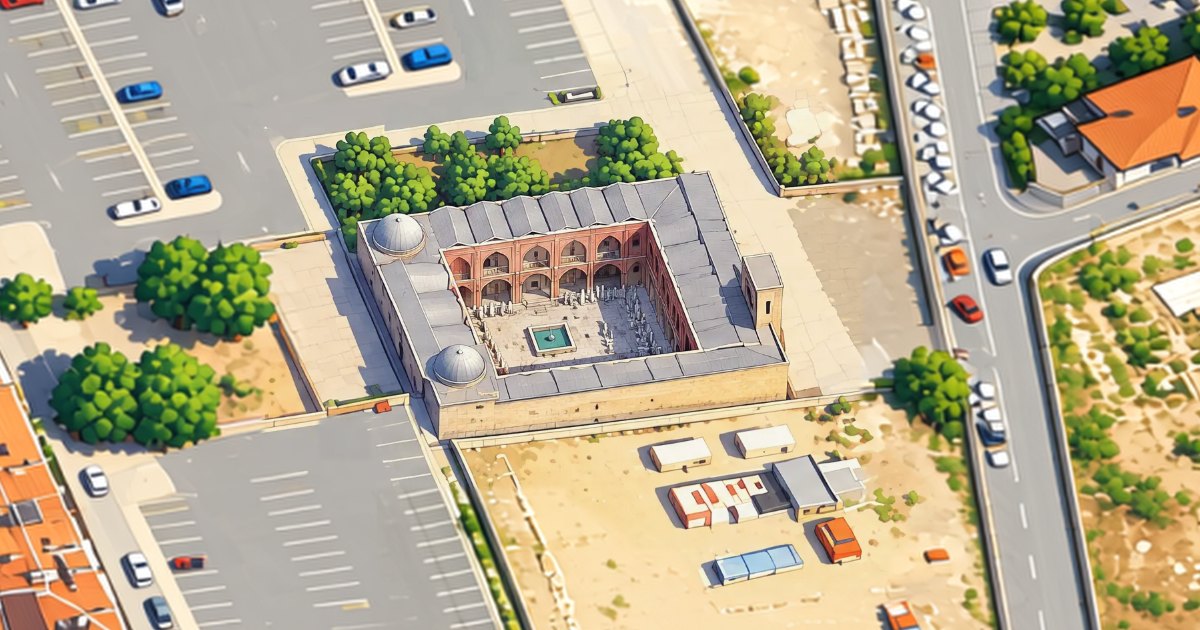
In the middle of the courtyard there is a pool, and on each side four student rooms. The domed rooms on both sides of the main hall were used as classrooms in winter. Right beside the entrance stands a two-storey tomb built for Bedreddin Muslih, with three sarcophagi inside.
On the portal, light and dark stones were laid in turn to form two-coloured arches, and star patterns decorate its widest border. The building began to fall into decay after the seventeenth century and was used until 1924. After repairs, it opened to visitors in 1960 as the funerary monuments section of the Konya Museum.
Did you know? With its open, arcaded courtyard and two storeys, the Sırçalı is the only surviving madrasa of this type in Konya. We recommend checking before your visit which parts of the building can be visited today.