Mevlana Cultural Centre
A large cultural centre about one kilometre east of the Mevlana Museum, home to sema ceremonies. It has an indoor sema hall seating thousands and an open-air sema area. Every December, the sema programmes of the Şeb-i Arus ceremonies, which end on 17 December, the anniversary of Mevlana's death, take place here.
About
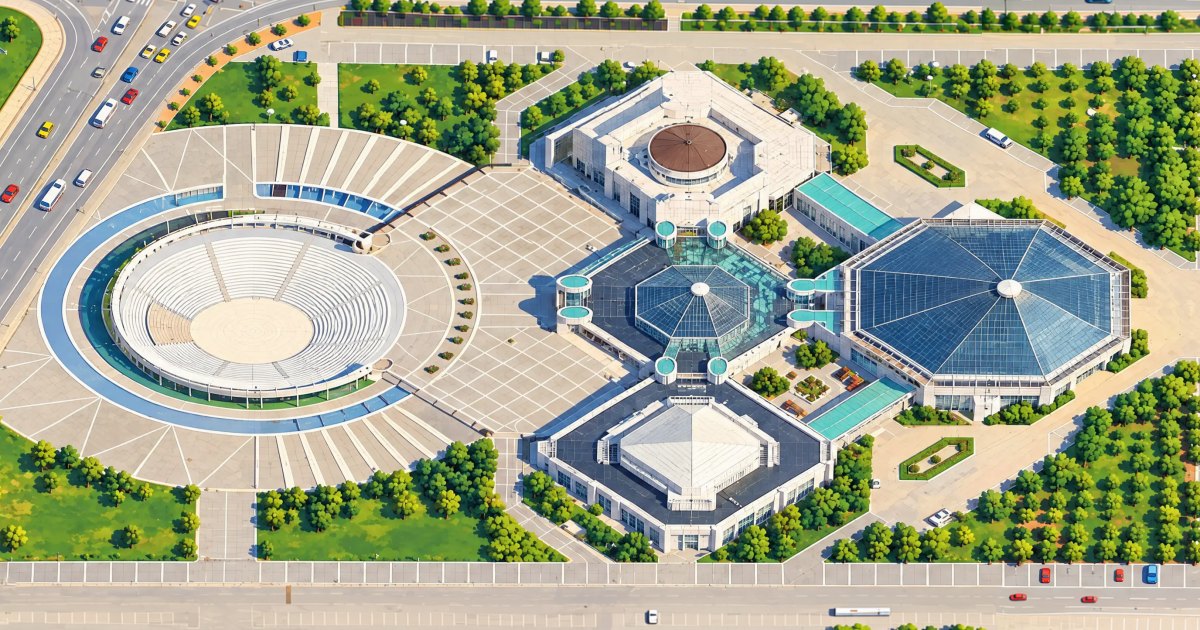
Walk about one kilometre east from the Mevlana Museum and you will reach Konya's great cultural centre built for the sema. The centre stands on the site of the former Aslanlı Kışla barracks, spreads over 108,000 square metres and consists of eight blocks. Its story is one of patience.
In 1990 an architectural design competition was held, and today's design was chosen from among 69 entries. The foundation stone was laid in 1993, but construction moved slowly for years; after ten years only 35 per cent of it was finished. After a protocol was signed in 2004, the remaining part was completed in 100 days, with about a thousand workers labouring day and night through a harsh winter, and the centre opened on 12 December 2004.
The heart of the building is the indoor sema hall. Measuring 60 metres across and 38 metres high, this hall was shaped with Hagia Sophia, the Sultanahmet Mosque and the Selimiye Mosque as models. The hall can welcome thousands of people at once.
In addition, there is an open-air sema area for 3,000 people and the Sultan Veled Hall for seminars and concerts. Every December, the Şeb-i Arus ceremonies, which end on 17 December, the anniversary of Mevlana's death, are held in this hall. During the rest of the year, too, the Konya Turkish Sufi Music Ensemble performs a sema ceremony in the indoor hall every Saturday evening at seven; as the programme may change, please check the latest announcements before you go.
The sema is not a show; it is a ceremony of remembrance and contemplation, and it consists of four parts, known as the four selams. As the whirling dervish turns, the right palm faces upwards and the left palm faces downwards; the Mevlevis describe this as receiving from God and giving to the people. Did you know?
The hat on the dervish's head, called the sikke, represents a tombstone, and the long-skirted robe, the tennure, represents the shroud. If you attend a sema ceremony, watching in silence is the finest way to show respect for this spiritual moment.