
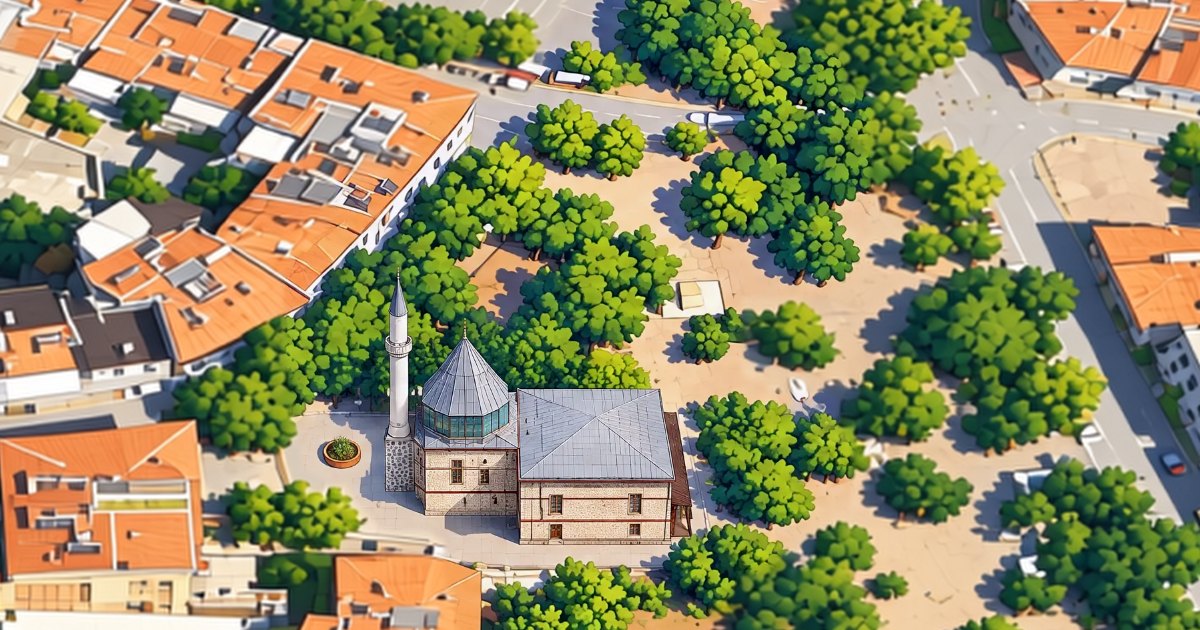
Shams-i Tabrizi Mosque and Tomb
Known as the shrine of Shams-i Tabrizi, the spiritual companion of Mevlana Jalaluddin Rumi, this tomb and small mosque is one of the most important places of visit for the Mevlevi order. Because it has no inscription or endowment deed, its original construction date is unknown; Ottoman records list it as a dervish lodge in 1476. Inside the plain stone building stands a single large cenotaph.
About
You are now in front of a simple building that bears the name of Shams-i Tabrizi, the friend who changed Rumi's life. According to Ahmed Eflaki, the wandering dervish Shams arrived in Konya on 29 November 1244, and a deep spiritual bond grew between him and Rumi. Some time later he left for Damascus; Rumi sent his son, Sultan Veled, who brought him back.
According to Sultan Veled, Shams disappeared again in December 1247. It is hard to reach a firm conclusion about where and when he died; besides Konya, tombs attributed to him exist in other cities such as Khoy and Tabriz. For centuries, however, the Mevlevi have visited this place as Makam-ı Şems, the shrine of Shams.
Because the building has neither an inscription nor an endowment deed, we do not know who built it or when. It first appears in an Ottoman endowment record of 1476 as a dervish lodge serving passing travellers. In 1509 the provincial governor İshak Bey enlarged its small mosque and added a school for those who wished to learn the Quran.
This was the most important of the five Mevlevi lodges attached to the Mevlana lodge. Inside, a single large cenotaph stands in the square tomb chamber, about seven metres by seven. The tomb opens like an iwan onto the sema hall to the east, which was also used as a mosque and as a meeting place for dervishes.
The minaret was added much later, during the repairs of 1955 and 1967. Did you know? Mevlevi dervishes arriving in Konya would first visit the place where Rumi and Shams are believed to have met, then this tomb, and finally the tomb of Rumi himself.
The first sema ceremony of new whirling dervishes trained at the lodge was also held here, on a Friday, without visitors. People have prayed here for centuries; please respect the silence and mind the prayer times.


